AI Automation Agency: What enterprise teams should expect

Co-Founder & Lead AI Architect
· 8 min read
On this page · 7 sections
- 01Start with the business outcome, not the feature list
- 02How an AI Automation Agency actually works
- 03Choose the right automation lane for your stack
- 04What to expect from a pilot before you scale
- 05How enterprise teams can separate credibility from hype
- 06Move from pilot to production with a partner built for enterprise delivery
- 07Frequently asked questions
An AI Automation Agency should be judged like any other enterprise delivery partner: by the result, the fit with your systems, and the quality of the pilot. A strong AI Automation Agency does not lead with a feature catalog or a polished demo alone.
Feature-led selling turns the work into a price contest. Outcome-led delivery is different. It starts with a workflow, a constraint, and a change your team can verify in production. That matters now because a survey showing 86% of CEOs see AI as a key player makes clear that these decisions already reach the boardroom.
For enterprise teams, the right test is simple. Can the partner define a fixed scope, connect to the real systems of record, and prove value before asking for a larger rollout? A serious proof of concept should be measurable, bounded, and priced to cover hosting, support, and delivery risk, not treated as free presales theatre.
Start with the business outcome, not the feature list
What buyers should ask first
Start with the business outcome, not the model, framework, or agent brand. A buyer should be able to say what gets better if the automation works. That might be lead quality, approval cycle time, resolution speed, forecast accuracy, or customer satisfaction.
The first questions are practical. Which workflow is being changed, who owns it, and what is the current baseline? What system holds the source data, and where does the output need to land? If the answer stays at the level of “chatbot,” “copilot,” or “dashboard,” the proposal is still too shallow.
This matters because feature-led work is easy to compare on price. One vendor promises a bot, another promises a smarter bot, and the buying team is left choosing between demos. A stronger partner ties the work to a narrow operating problem and defines what success looks like before any build starts.
Why measurable outcomes protect budget
Measurable outcomes protect budget because they reduce ambiguity. They tell you what to instrument, what to review in the pilot, and what must change in the underlying process for the automation to matter.
They also make it easier to stop work that is not paying off. If a proposal cannot name the operational metric, the owner, and the review window, it is hard to defend expansion later. Enterprise teams do not need more AI surface area. They need less manual work, fewer handoff delays, and decisions that improve with better data.
The best agencies understand that an automation program is not bought once. It earns its way forward. Clear outcomes make that possible.
How an AI Automation Agency actually works
Discovery and process mapping
An AI Automation Agency should start with the workflow, not the interface. The right partner maps the current process, identifies every system touchpoint, and separates routine cases from the exceptions that still need a person.
That discovery step should produce a narrow pilot brief. Good teams productize the pilot into a clear package with fixed scope, three deliverables, and measurable results within 30 days. It should define the trigger, the inputs, the action taken, the destination system, and the business rule for success.
If the workflow crosses teams, ownership needs to be clear before any build begins. This is where enterprise buyers should look for depth. A credible team will ask about permissions, source quality, audit needs, fallback handling, and how users will review outputs. The AI automation agency for enterprise teams that ships in months should feel closer to systems delivery than to campaign work.
Build, integrate, and measure
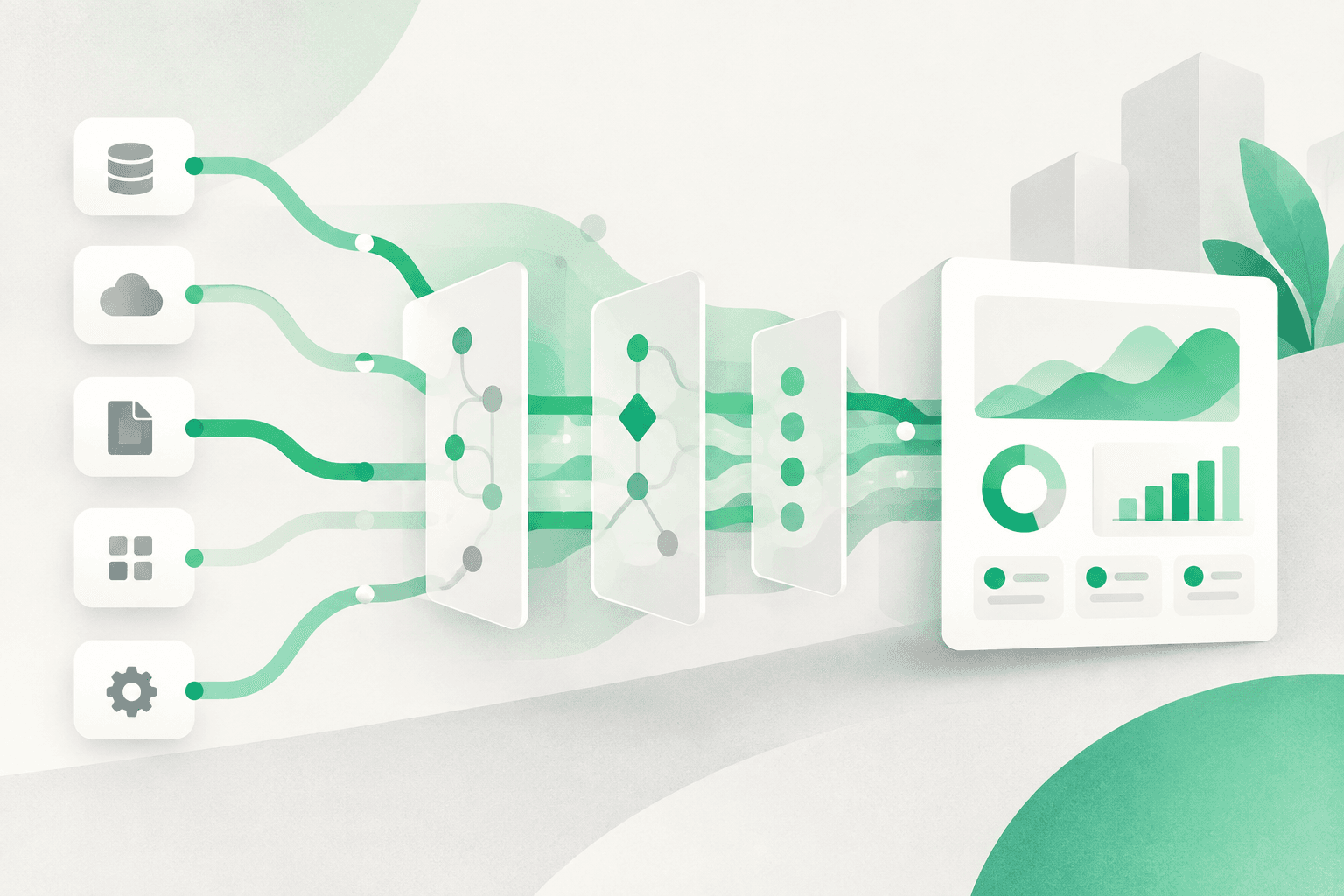
After discovery, the work moves into implementation. That usually means connecting APIs, shaping prompts or rules, handling retries, and writing results back into the tools people already use. If the partner cannot work inside your CRM, ERP, service platform, or data layer, the automation will stay trapped in a demo.
Measurement belongs in the build, not at the end. The pilot should log what entered the workflow, what action was taken, what required review, and what changed in the operating metric. That creates a clean basis for deciding whether the pilot becomes a managed retainer, a broader rollout, or a stopped experiment.
A disciplined agency prices the pilot so it can be supported properly if it works. Low-risk POC pricing is healthier than a free pilot that never had a delivery model behind it, and the price should cover expected API costs, hosting, support, and margin. A serious team will also say where the pilot is not worth doing.
Choose the right automation lane for your stack
Internal workflows and integrations
Different use cases need different kinds of delivery. If the problem is repetitive work across line-of-business tools, the right lane is process automation and integration. Typical examples include routing requests, enriching CRM records, reconciling fields between systems, or preparing cases for human review.
In this lane, the hard part is rarely the model. It is usually the business rule, the permissions model, and the write-back path into the tool that owns the process. Buyers should look for a partner that can make those connections safely and keep the process observable after go-live.
Data pipelines, decision intelligence, and custom LLM apps
If the problem is not action but visibility, the right lane may be data engineering or decision intelligence. Many teams have useful data locked in operational systems, vendor platforms, file drops, or inconsistent schemas. Before a model can help, the data has to be clean, governed, and queryable.
That is where clean, AI ready intelligence matters. A solid partner should be able to build pipelines, define source logic, expose trustworthy metrics, and then layer a custom LLM app or workflow on top of that foundation. Without this step, teams often end up automating around bad or partial data.
When autonomous agents make sense
Autonomous agents make sense when the work requires planning across several tools, not just one prediction or one generated response. They are useful when a workflow has clear goals, explicit tools, and a human approval path for the cases that carry risk.
They are not the default answer for every automation brief. If a rules-based integration will solve the problem, keep it simple. If the task needs tool use, state tracking, context retrieval, and controlled action across systems, then an agent can be the right design.
The buying decision should follow the workflow. Start with the operating need, then choose the service line that fits the stack.
What to expect from a pilot before you scale
Scope a POC with clear metrics
A proof of concept should be fixed in scope and narrow enough to validate quickly. Pick one workflow, one owner, one source of truth, and one metric that matters to the business. That keeps the pilot honest and makes review straightforward.
The scope should also define what the automation will not do. List the exception types, the required approvals, and the cases that still stay with a person. When those boundaries are clear, the team can judge the pilot on real performance instead of on a generic sense that the demo looked promising.
A useful pilot brief usually includes a current baseline, the target result, the integration points, the data needed, and the acceptance criteria. It should also state what evidence will be reviewed at the end of the validation window. If you want a model for this kind of work, cut the repetitive work with AI automation is the operating frame most teams actually need.
Set pricing and margin guardrails
A pilot should be low risk for the buyer, but it should not be free. In practice, a POC priced at $500, $2,000 is meant to validate value and define the terms for expansion if targets are met.
What matters more than the entry price is the structure behind it. Pricing should cover the likely API spend, hosting, support load, and delivery effort, with enough margin to keep the work sustainable. That protects both sides. The buyer gets a supported pilot, and the partner is not forced to cut corners after signature.
The pilot should also define the path to production before work starts. If the result is positive, everyone should already know what expands next, who owns it, and how the rollout stays tied to business metrics.
How enterprise teams can separate credibility from hype
Signals of a production-ready partner
Enterprise teams can separate credibility from hype by looking for implementation depth. A real delivery partner talks comfortably about systems of record, API constraints, identity, observability, exception handling, and rollback plans. They can explain how the automation will behave on a bad input day, not just on a good demo day.
They also show evidence of working inside operating environments, not only sandboxes. That includes sample architecture, governance choices, prompt or rule versioning, and a clear handoff model for business users and technical owners. AI integration services for the systems you already run is the kind of phrase that should mean something concrete in the proposal.
A weaker proposal tends to stay abstract. It leans on trends, generic productivity claims, or outreach-style promises instead of showing how the workflow will actually be changed.
Questions that expose weak proposals
Use a few direct questions early in review:
- Which system owns the source data, and which system receives the output?
- How do you handle failed calls, low-confidence responses, and duplicate actions?
- What stays under human approval, and what runs automatically?
- How will success be measured during the pilot and after rollout?
- What logs, alerts, and audit trail will we have in production?
- Who owns the code, the prompts, and the integration assets at handoff?
Strong partners answer these without strain. Weak ones drift back to features, screenshots, and promises that never reach the operational layer.
Move from pilot to production with a partner built for enterprise delivery
The move from pilot to production is where most buying decisions are really made. A working test matters, but the larger question is whether the partner can turn that result into a stable operating capability tied to business metrics.
That means expanding the workflow carefully, hardening integrations, improving monitoring, and making ownership clear across business and technical teams. It also means pricing the ongoing work in a way that supports hosting, support, and steady improvement, rather than treating delivery as a one-off build.
For enterprise teams, the best next step is not a bigger demo. It is a clearer rollout plan. Take the pilot result, define the production controls, and decide which workflows should expand next based on operating value.
EdgeFirm is useful in that phase because the work is scoped around real systems, governed data, and production delivery, with the code in your hands at the end. If you want an AI Automation Agency built for enterprise systems and measurable rollout, talk with EdgeFirm.
Frequently asked questions
What do AI automation agencies do?
AI automation agencies design and implement automations that connect your systems, reduce manual work, and improve a business outcome. The best ones package the first engagement as a fixed-scope pilot with clear deliverables, measurable success criteria, and pricing that already accounts for hosting, support, and real delivery effort.
What is the best AI agent for automation?
The best AI agent for automation is the one that fits the workflow, tools, and control requirements of the job. For enterprise work, that usually means an agent that can use approved tools, follow clear business rules, keep state across steps, and hand uncertain cases to a person instead of guessing.
Are AI automation agencies worth it for enterprise teams?
Yes, AI automation agencies can be worth it for enterprise teams when the work is tied to a clear operational bottleneck and measured against business results. The value usually comes from faster cycle times, better employee productivity, cleaner handoffs between systems, and more consistent customer or internal service outcomes.

Written by
Co-Founder & Lead AI Architect
Usman has spent 8+ years building AI and machine learning systems for enterprises. He specializes in LLM architectures, RAG systems, and the data pipelines that keep production AI accurate.
Work with EdgeFirm
Ship this in your stack in 4–5 months.
A 30-minute call with the founders who will write your code. Fixed price, full IP ownership, no offshore handoff.
Book Strategy CallOr get the 4-Month Framework